The 49ers ran Las Vegas out of its plan before they took the ball away
Las Vegas threw eight passes before halftime and 24 after it. The 49ers hit Kirk Cousins at a lower rate in the second half, and still took the ball away five times.
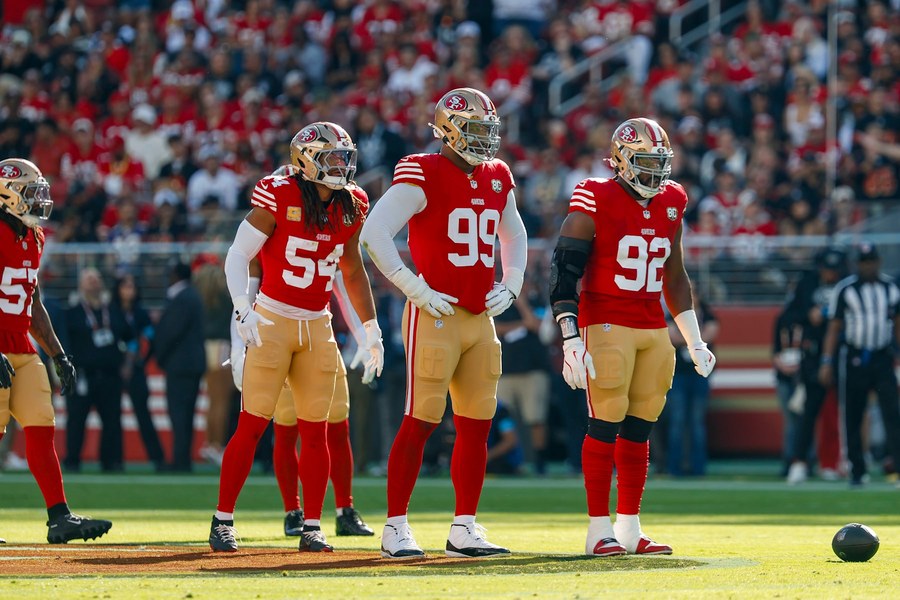
San Francisco beat Las Vegas 38-17 at Levi's Stadium on Sunday, and the five takeaways after halftime will be what people remember about it. The takeaways did not win the game. They came after it was won. San Francisco settled the result in the first half, with the ball, on the ground. By halftime Las Vegas had one way left to play, and that way gave the 49ers the chances they took.
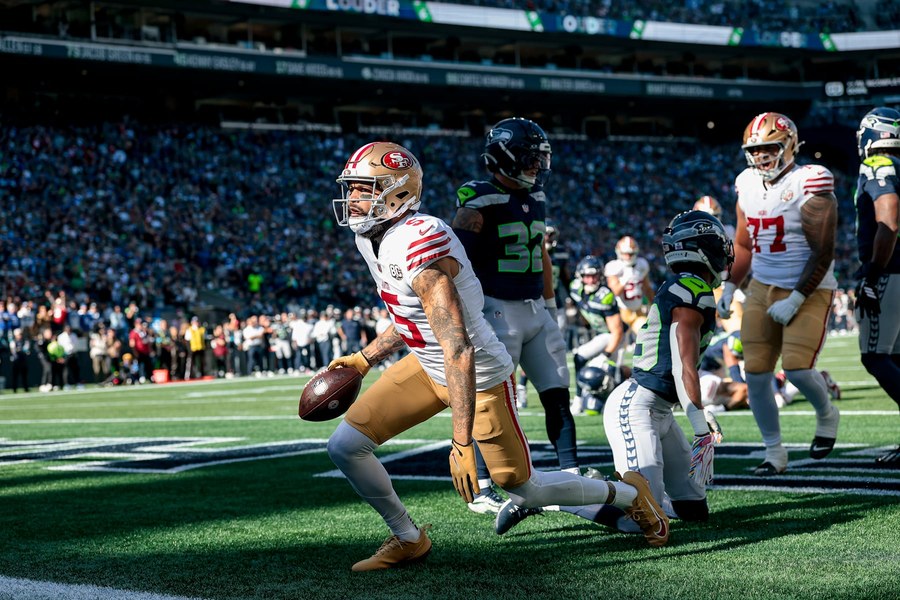
The opening drives make the case. San Francisco's first three possessions went 12, 13 and 12 plays. They covered 69, 89 and 84 yards and all three ended in touchdowns. Together they held the ball for 19 minutes and 23 seconds. Las Vegas had the ball for 71 seconds in the first 13 minutes of the game, and ran three plays.
The 49ers are 7-1, and the game changed something about the season. Before kickoff they had won six of seven games while giving the ball away three more times than they took it. They now have the season margin in their favor, plus-1. The first half is the part of Sunday they can expect to repeat, and the takeaways are the part they cannot.
The first half was the plan#
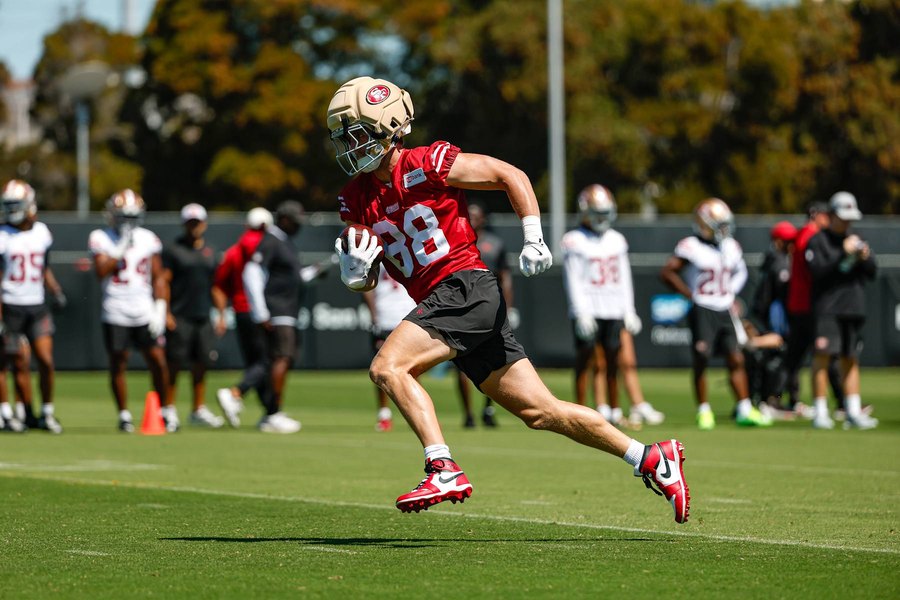
San Francisco ran 25 times for 125 yards before halftime, on 38 offensive plays. Christian McCaffrey had 13 of the carries. Brock Purdy had six of them, and four were scrambles that covered 36 yards. Two of those scrambles kept the second touchdown drive going: 18 yards on third-and-15 from the Las Vegas 36, then 11 yards on second-and-11 to the 8. Both first-half fourth downs were converted: a 4-yard throw to George Kittle on fourth-and-2 from the Las Vegas 45, and a 4-yard McCaffrey run on fourth-and-1 from the 23.
Kyle Shanahan said afterward that the staff had seen the opening coming. "We talked about it on Friday that we had an opportunity to do that," he said of the first-half run game, "but we wouldn't be able to do that if we didn't do good in the pass game and do well on third down, and the guys did that." San Francisco converted four of its six first-half third downs and did not punt all day.
By the half San Francisco had held the ball for 20 minutes and 35 seconds and led 21-10. Las Vegas had run 17 plays. The field goal came on a drive that started at the San Francisco 42, and how Las Vegas got there comes up below.
What the lead bought#
Klint Kubiak described the second half before anybody asked him about it. "You got to go toe-to-toe in the first half so that the second half isn't a throwing fest," the Las Vegas coach said. Asked about Cousins's turnovers, he said: "When you're in position to throw the ball every down starting in the second quarter, you're going to throw interceptions."
The game book bears him out. Las Vegas ran nine times and threw eight passes in the first half. In the second half it ran six times for minus-3 yards and threw 24 passes. It had six second-half possessions, and five of them ended with a 49er holding the ball.
The pass rush is not what changed, and this matters for what comes next. The book credits San Francisco with six quarterback hits and no sacks. Two of the hits came on Cousins's eight first-half throws, from Romello Height and DeForest Buckner. The other four came on his 24 second-half throws. Cousins was hit more often per throw when Las Vegas was still trying to run the ball than when it had stopped.
So the five takeaways came from somewhere other than pressure:
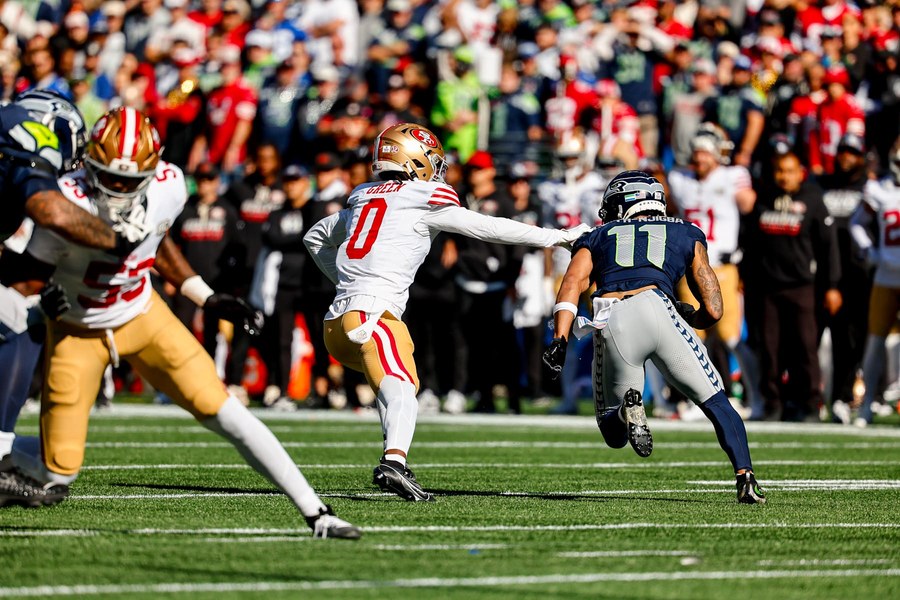
- The first play of the half: Cousins fumbled the exchange, picked the ball up and threw late. Jaden Dugger caught it and returned it 35 yards for a touchdown. The book charges no quarterback hit on the play.
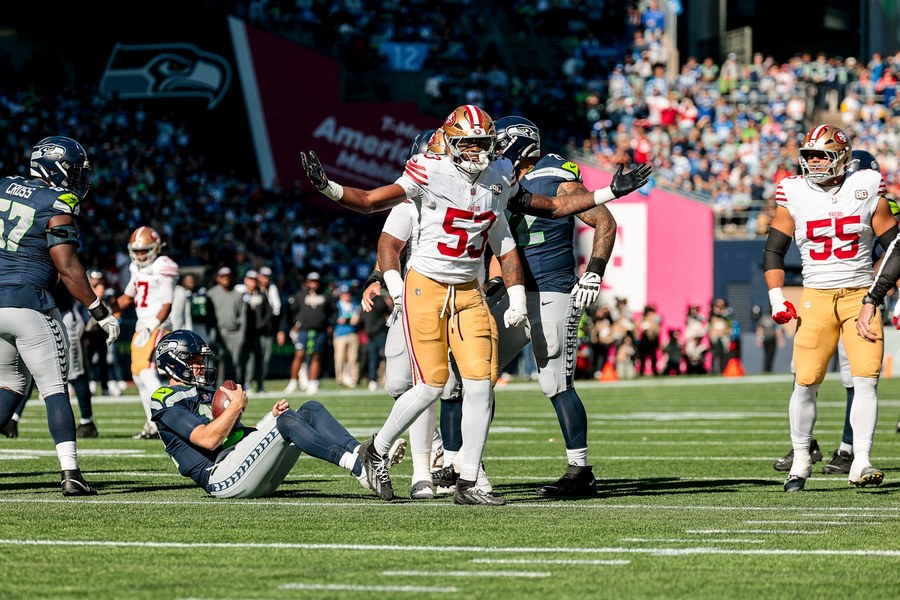
- Two punched-out balls: Fred Warner knocked the ball from Brock Bowers at the San Francisco 26, and Dre Greenlaw recovered. Upton Stout knocked it from Michael Mayer at the 1, and Warner fell on it in the end zone.
- Two interceptions with a hit on the throw: Osa Odighizuwa hit Cousins on the throw Renardo Green caught in the end zone. Buckner hit him on the fourth-and-11 throw that Malik Mustapha caught.
Two of the five came from a hit. Two came from defenders punching at the ball after a catch. One came from a fumbled exchange. The lead gave the defense 24 second-half throws to make those plays on. It did not make the throws any easier to intercept.
What the turnovers covered#
The second half was not clean, and the margin hides that. San Francisco's first possession of the second half lasted three plays and ended when Treydan Stukes intercepted Purdy and returned the ball to the San Francisco 31. On its next possession, after Greenlaw's recovery, up 28-17 with 5:34 left in the third quarter, San Francisco went for it on fourth-and-1 at its own 40. Purdy's sneak gained nothing. "We got stopped on the fourth down and had our turnover," Shanahan said.
The kickoff coverage gave up more ground than either of those plays. Las Vegas returned seven kickoffs for 222 yards. Dylan Laube's 54-yard return after the third touchdown set up the field goal before halftime. On average, Las Vegas started its drives at its own 42 and San Francisco started at its own 24. "Special teams gave us short fields," Cousins said.
Las Vegas began three drives in San Francisco territory, at the 42, the 31 and the 40, and scored 3 points from them. Two of them ended only because a defender punched the ball loose, Warner's at the 26 and Stout's at the 1. The defense that did it will be without Gracen Halton, whose broken ankle ended his season.
What changed, and what would change it back#
Three numbers from Sunday are the extremes of San Francisco's season. Its 43 rushing attempts were eight more than in any other game; three of them were kneel-downs. Its 38 minutes and 18 seconds of possession beat the 33:50 against the Rams in Week 1. Las Vegas gained 24 rushing yards, the fewest by any 49ers opponent this season; Washington's 53 had been the low.
The turnover margin moved more than any other number. San Francisco took the ball away seven times in its first seven games and gave it away 10 times. After Sunday it is 12 and 11. At Atlanta two weeks before Sunday, the 49ers lost the ball four times and their defense never hit Michael Penix Jr. Against Las Vegas, both numbers ran the other way.
The reason for caution is the opponent. Las Vegas has now allowed 30 or more points in six straight games: Kansas City, New England, Buffalo, the Rams, the Jets, and now San Francisco. A first half like Sunday's says more about the 49ers' line if it comes against a defense that is not giving up points to everybody. Dallas on Sunday is the next evidence. If the 49ers cannot build an early lead there, the second half will not tilt toward the pass the way it did against Las Vegas, and the turnovers will have been a good afternoon rather than a pattern.
The call follows from the argument. San Francisco runs the ball 30 or more times at Dallas on Sunday, counted as official rushing attempts in the game book. Thirty runs would mean the 49ers were ahead long enough to keep running, which is how the Las Vegas game was won.
Sources: NFL official game book, Las Vegas at San Francisco, Nov. 8, 2026 (lineups, scoring summary, final team and individual statistics, drive chart, final defensive statistics, play-by-play); ESPN box scores for San Francisco's 2026 games and Las Vegas's 2026 schedule; postgame press conferences of Kyle Shanahan, Klint Kubiak and Kirk Cousins, club transcripts via 49ers Webzone, Nov. 8.