Opponents have reached the 49ers' red zone five times and scored one touchdown
San Francisco is 2-0 and has allowed 20 points, and neither team it has played had trouble moving the ball. The Rams averaged 5.1 yards a play and the Dolphins averaged 5.1 yards a play. Miami held the ball for 30:13, made 13 first downs, reached goal to go twice and scored no touchdowns on either trip. The four sacks the 49ers finally recorded came either with Miami snapping the ball at the San Francisco 10 or nearer, or after the lead had reached 15 points.
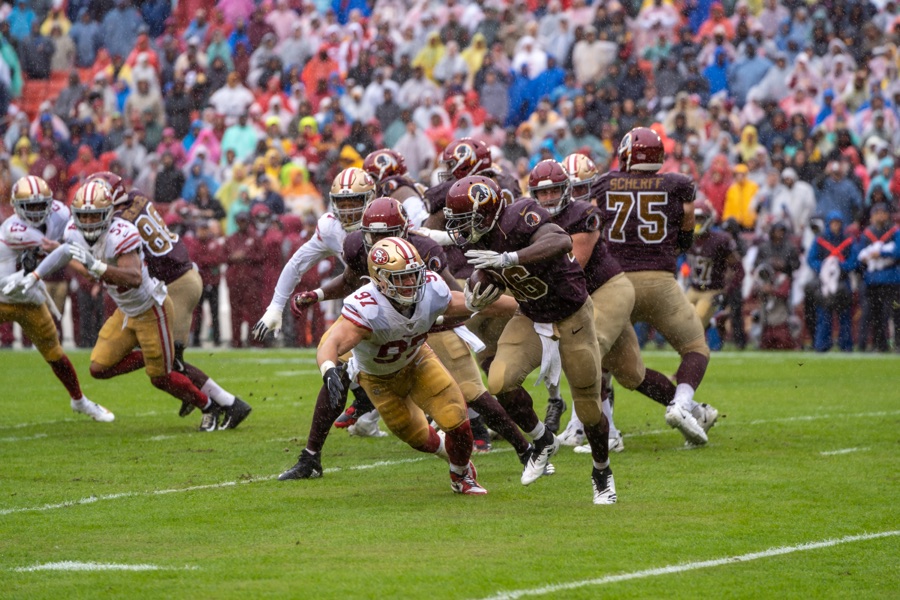
San Francisco is 2-0 and has allowed 20 points, and neither of the teams it has played had much trouble moving the ball. Los Angeles gained 5.1 yards a play on 57 offensive plays in Melbourne. Miami gained 5.1 yards a play on 56 offensive plays at Levi's Stadium on Sunday. The Dolphins held the ball for 30:13, made 13 first downs and converted 7 of 15 third downs.
What neither team could do was finish. The two game books record five trips inside the San Francisco 20 across the two games and one touchdown on them, with the Rams 1 for 3 and Miami 0 for 2. On goal to go the same two documents read 1 for 2 and 0 for 2.
So the 49ers are not stopping drives. They are stopping them at the end. That is a real way to play defense and a fragile one, because the last twenty yards of the field come up a handful of times a game, and because Miami's touchdown came on one throw from outside the red zone.
Miami spent nineteen minutes on its first three possessions and got six points.
The drive chart gives those possessions 9, 17 and 12 plays, 4:32, 9:21 and 5:24 of clock, and 155 net yards. They produced a missed 51-yard field goal and two made ones.
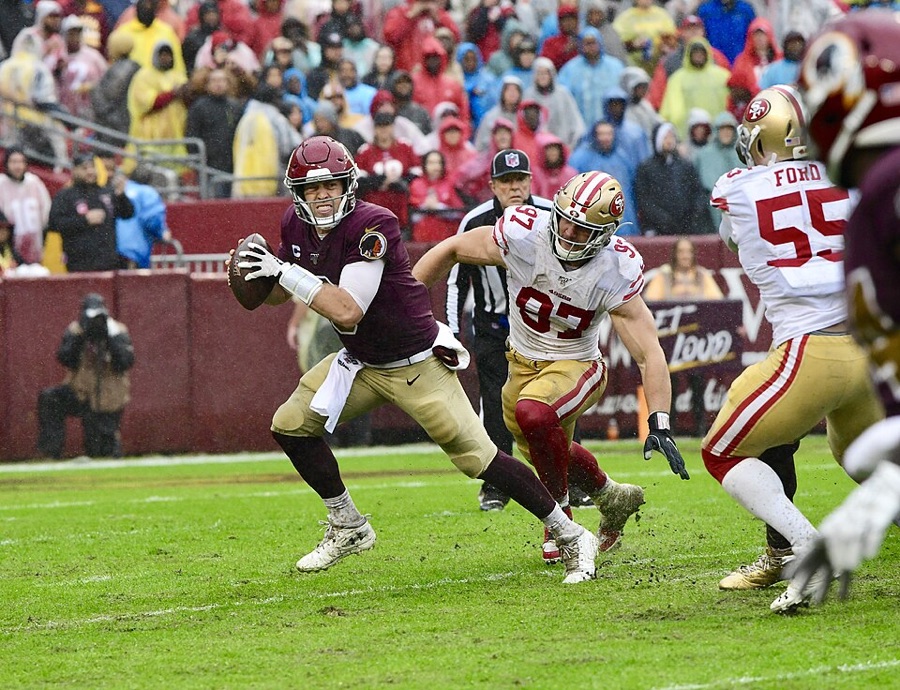
The second of them reached first and goal at the San Francisco 6 with 11:51 left in the second quarter. De'Von Achane ran up the middle for no gain. On second down Malik Willis was sacked at the San Francisco 10, four yards lost, Fred Warner and Upton Stout splitting the credit. On third and 10 from the 10 Willis was sacked again, out of bounds, no gain, by Romello Height. Miami kicked from 28 and the score went to 7-3.
The third of them reached first and 7 at the San Francisco 7 with 1:09 left in the half. Achane ran to the 2. Achane ran back to the 3. Willis was then sacked at the 3, and that play came off the board, because Miami was called for offensive holding and the down was replayed from the 13. Achane got eight of the thirteen yards back and Miami kicked from 24 with two seconds on the clock.
The book's own accounting of the afternoon reads Miami 0 for 2 in the red zone and 0 for 2 on goal to go, against San Francisco at 5 for 5 and 3 for 3.
The sacks arrived where the field was short or the game was gone.
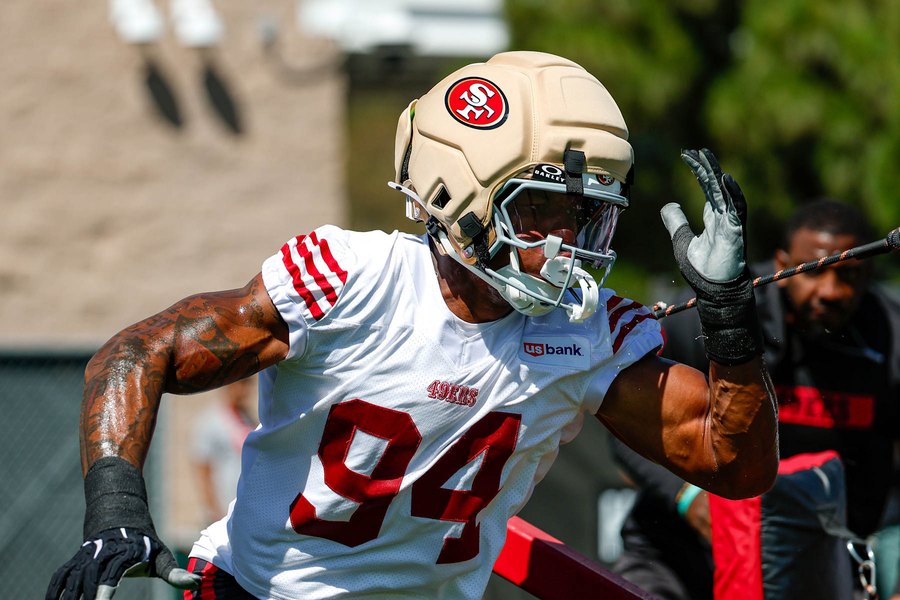
The Final Defensive Statistics page credits four sacks for 15 yards: one each to Marques Sigle, Keion White and Height, and a half apiece to Warner and Stout. Two of those four are the two on that first-and-goal series, with San Francisco ahead 7-3. Sigle's came at the Miami 29 in the third quarter with the 49ers up 21-6. White's came at the Miami 28 in the fourth with the 49ers up 35-6.
In Melbourne, across 61 defensive snaps, San Francisco recorded no sacks at all and eight quarterback hits. The season total is therefore four sacks in 120 defensive snaps, and four is a number small enough that one afternoon can move it by half.
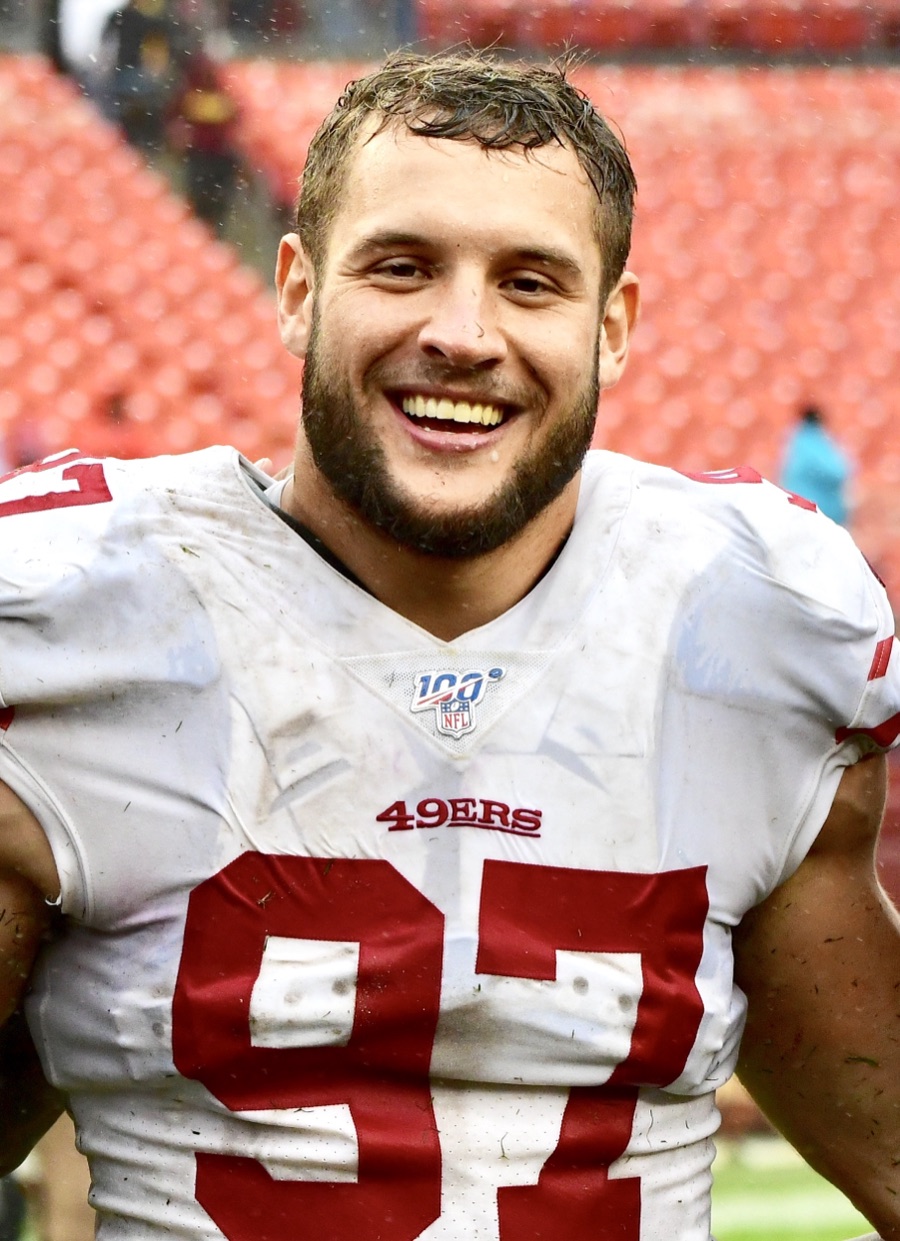
Five men are credited on those four sacks. Osa Odighizuwa played 41 of Sunday's 59 defensive snaps and Nick Bosa 40, the two largest snap shares on the defensive line, and neither is among the five. Odighizuwa is credited with one quarterback hit.
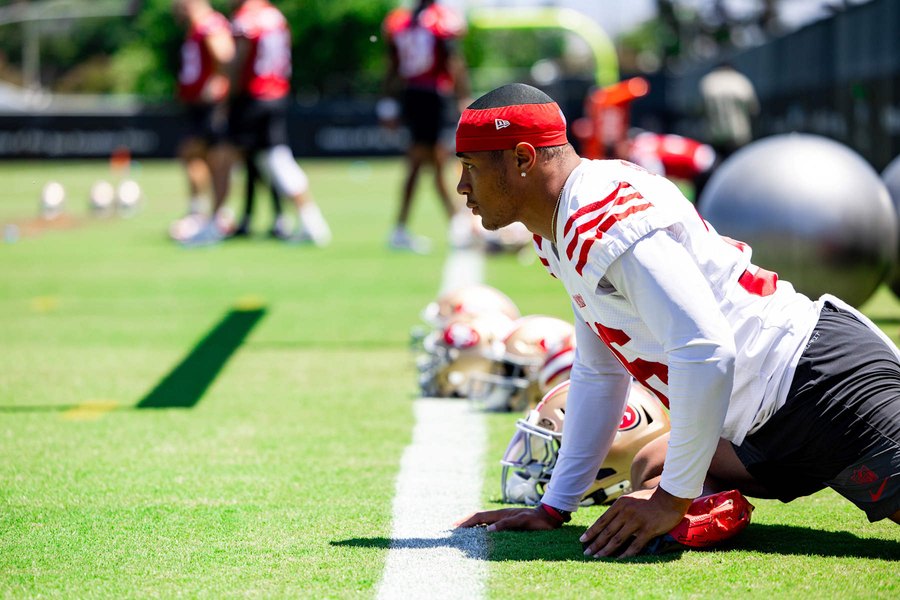
Bosa played 40 snaps and the official defensive table has nothing on his line.
Three assisted tackles. No sack, no quarterback hit, no tackle for loss. In Melbourne he played 36 of 61 defensive snaps and was credited with one quarterback hit and both of San Francisco's two tackles for loss, and no sack. Across the two games that is 76 of 120 defensive snaps without a sack.
Pro Football Focus charts pressure itself, on its own definitions, and its charting of Sunday puts Bosa ahead of every other San Francisco defender in total pressures. It also has him rushing the passer fewer times than Odighizuwa. Those are rankings inside one vendor's method rather than facts about football, and the values underneath them belong to that vendor.
John Chapman, who breaks down 49ers film snap by snap on the 49ers Rush podcast, went after that method on August 15, on a preseason play where he believed the wrong lineman had been charged with a quarterback hit. "They don't know everybody's line rules," he said. "So wherever the pressure is closest to, they attribute." He was arguing about blame rather than credit. The mechanism he describes runs the same way when the credit goes to a rusher: proximity to the quarterback is what gets scored, and arriving is not the same as finishing.
Two documents describe the same 40 snaps. The game book says Bosa did not get there. PFF's charting says he got closer than any other 49er. Both readings can be correct, and only one of them puts a team in second and 16.
What would break this argument.
Miami converted 7 of 15 third downs on Sunday. The Rams converted 2 of 9 in Melbourne. Those two rates do not describe the same defense, and one game of each is not a season.
Then there is the touchdown. Miami took the ball at its own 17 with 4:03 left in the fourth quarter, trailing by 29. Three plays and 1:33 later it had scored, on a 77-yard throw from Willis to a receiver who played 7 of Miami's 59 offensive snaps and was targeted once all day. Willis finished 14 of 23 for 197 yards, which means his other 13 completions produced 120.
That drive is the counterargument in one play. The red zone is where this defense has been good, and the way to beat a red-zone defense is to score from outside it.
What would settle the question is narrow and it arrives Sunday, when Arizona comes to Levi's Stadium at 1:05 p.m. Pacific. A red-zone stop with the game still one score, and a sack taken between the 20s, would say this is a defense rather than a set of circumstances. Another afternoon of 5.1 a play and one opponent touchdown would say the circumstances keep happening, which is its own kind of answer.
What changed on Sunday.
At kickoff San Francisco had not recorded a sack in 2026. It has four now, and that is the thing about this defense that was true at kickoff and is not true after it. The rest moved by one game and pointed the direction it was already pointing.
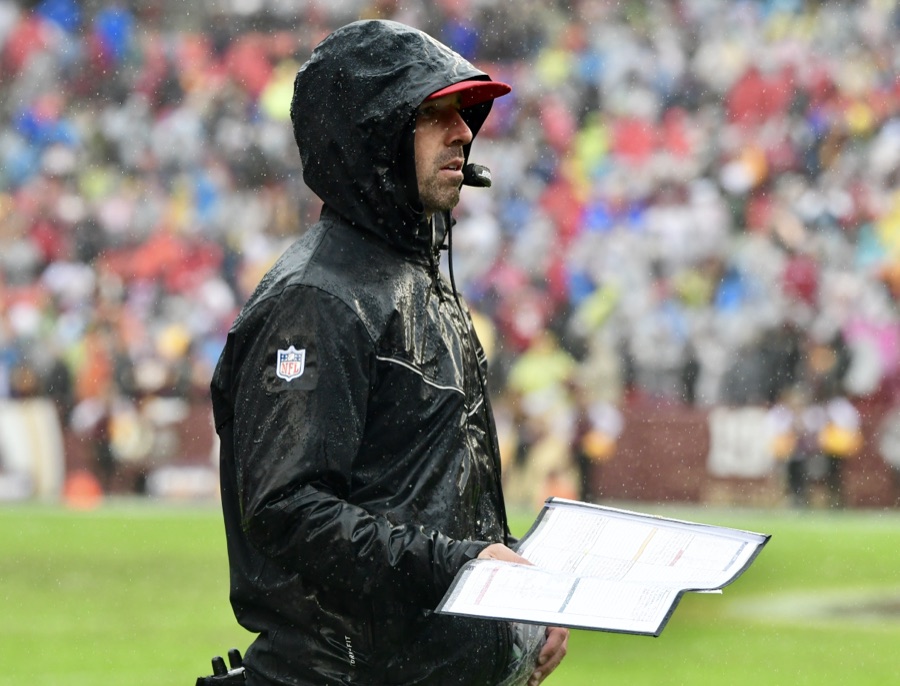
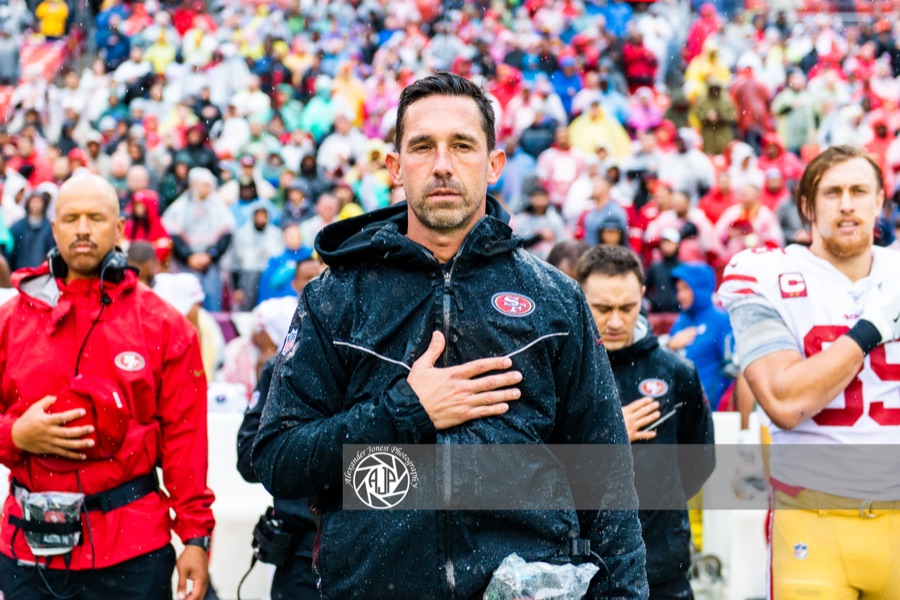
The Called Shot. Arizona scores no more than one touchdown at Levi's Stadium on Sunday. Both teams that have played San Francisco this season scored exactly one, and both reached the red zone and came away with less. The case against it is the one Miami made with 4:03 left: this defense has allowed 574 yards in two games, it will play Sunday without James Thompson Jr., who took 21 of the 59 defensive snaps against Miami and has a high-ankle sprain Kyle Shanahan put at three to six weeks, and a single throw is all the margin requires.
Miami's touchdown drive took 1:33 and covered 83 yards. Its two field-goal drives took 14:45 and covered 121.
Sources: NFL official game books, Miami at San Francisco, September 20, 2026, and San Francisco at Los Angeles, September 11, 2026, for every score, drive, snap count, sack credit and team rate above. PFF Premium Week 2 game grades for the pressure ranking, which is PFF's own charting. John Chapman, 49ers Rush podcast, August 15, 2026. 49ers.com and ESPN schedule pages for the Week 3 kickoff.