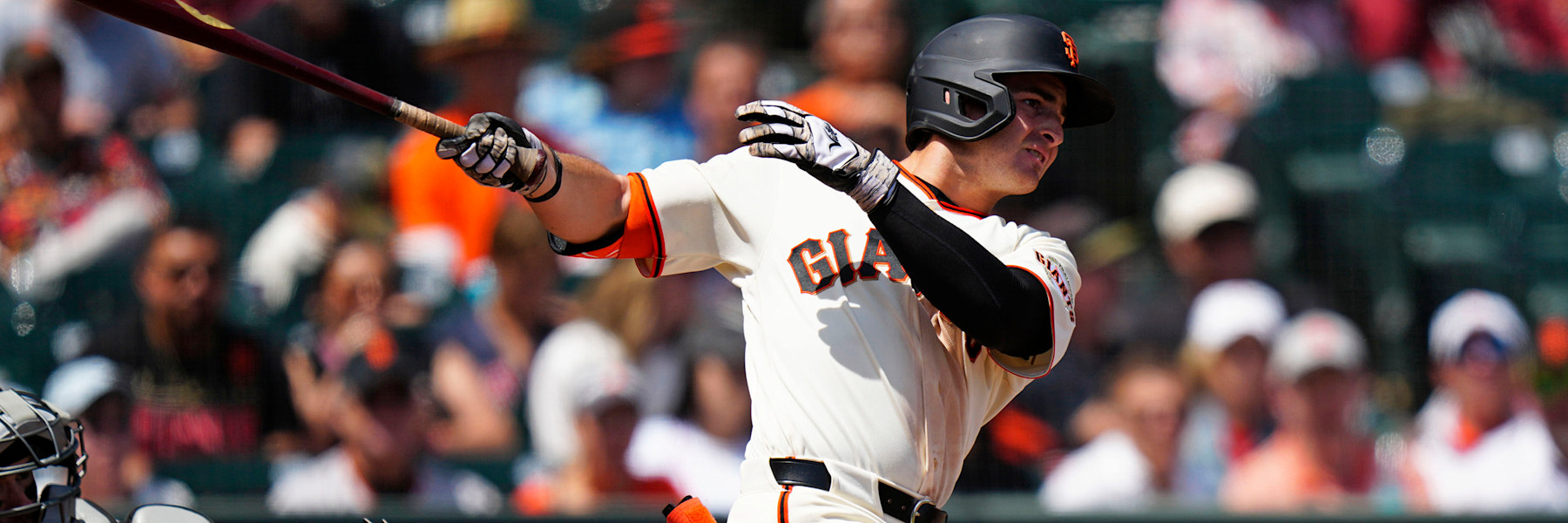
The Giants can hit with men on base. They are last at putting them there.
San Francisco is ninth in baseball at hitting with runners in scoring position and last in the major leagues at drawing a walk, with 429. The 371 runs it has scored that did not arrive on a swing over the fence come to 2.42 a game, against a league average of 2.67.
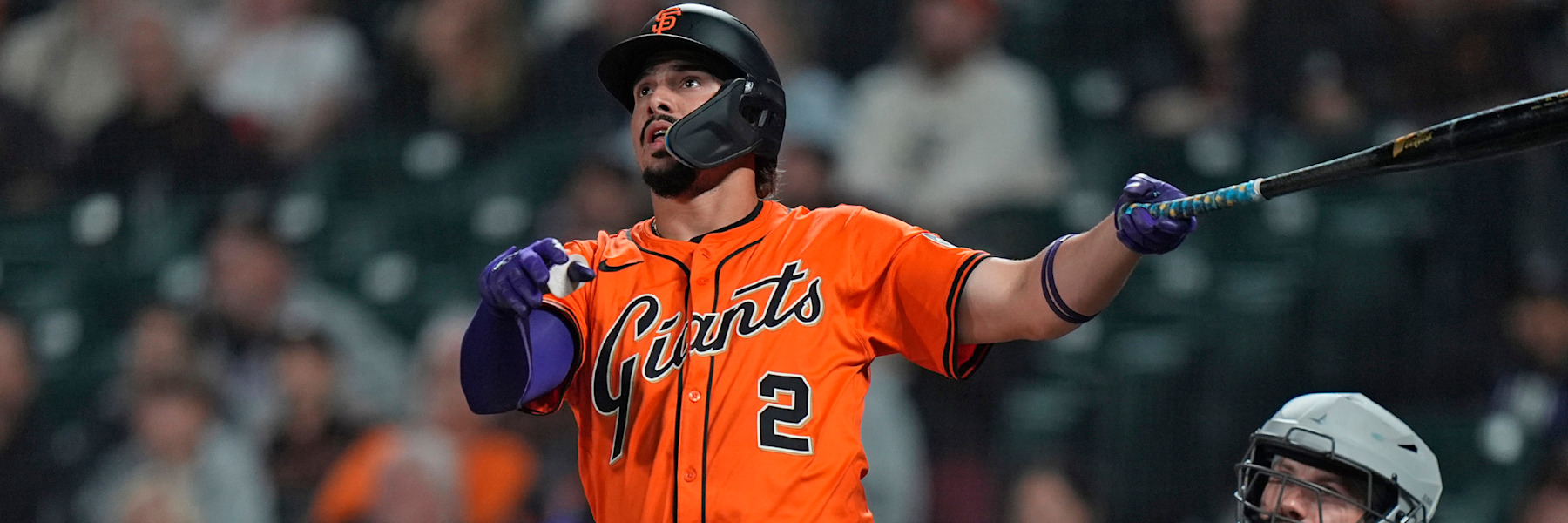
How does a club that hits .263 with runners in scoring position, ninth best in the major leagues, finish twenty-sixth in runs scored without a home run?
San Francisco has scored 371 runs this season that did not arrive on a swing over the fence. Across 153 games that is 2.42 a game. The league average is 2.67, and only Cincinnati, Seattle, the Yankees and the Mets get less out of everything that is not a home run.
The usual explanation for a number like that is a club that folds with men on base. That explanation is available, it is satisfying, and the data says it is wrong.
How the list is built#
Every run falls into one of two buckets: a run that crossed the plate on a home run, counted off the runs batted in credited to each home run in the league's own play-by-play, or a run that got there some other way. The second bucket is the list below, divided by games played, for all thirty clubs.
It is not park adjusted, and it is not a measure of quality, because a home run is the best outcome in baseball. It measures one thing: how much offense exists when the ball stays in play.
Only four clubs score fewer runs per game without a home run than San Francisco
Runs scored on plays other than home runs, per game, 2026 regular season through games of Wednesday, September 16. Total runs from the league's official team hitting record; runs on home runs counted off the runs batted in on every home run in the league's play-by-play and cross-checked against Baseball Savant. Bars scaled against a common axis of 4.00 runs a game. League average 2.67.
Look at the bottom of the list before the top. Milwaukee scores 3.51 runs a game without a home run and has hit 146 of them, tied with the Angels for fewest in baseball. The Cubs are at 2.99 and have hit 211. Those two clubs are not doing the same thing, and both of them score. The five clubs at the other end are a different matter, and San Francisco sits among them at 2.42, a quarter of a run a game below the league.
Over 153 games a quarter of a run a game is about 38 runs.
The obvious answer is the wrong one#
If the Giants were failing in the spot, the batting average with runners in scoring position would say so. It says the opposite.
San Francisco hits .263 with runners in scoring position, on 1,173 at-bats. The league hits .253. That is ninth of thirty, and the eight clubs ahead include Tampa Bay, Milwaukee and Philadelphia. The sample is a full season and the gap over league average is ten points, which is real and small. The reading is not that the Giants are good in the clutch. It is that they are normal, and normal rules out the folding explanation.
The number that does the work is the denominator. Those 1,173 at-bats with a runner in scoring position are twenty-second of thirty. The league average club gets 1,238 of them. San Francisco is short about sixty-five chances, which is a little over one every two and a half games, and it hits well enough in the ones it gets.
So the question moves one step back. Why are there so few men on second and third?
Four hundred and twenty-nine walks#
Here is the whole Giants offense in one table, and every row of it is a full-season measured figure rather than an estimate.
| San Francisco | Rank of 30 | |
|---|---|---|
| Hits | 1,288 | 8th |
| Doubles | 252 | 8th |
| Triples | 25 | 8th |
| Batting average | .248 | 9th |
| Slugging percentage | .408 | 8th |
| Average with runners in scoring position | .263 | 9th |
| Home runs | 175 | 14th |
| Walks | 429 | 30th |
| On-base percentage | .310 | 27th |
| Runs per game | 4.24 | 23rd |
Eight rows of a good offense, one row at the bottom of the league, and the two rows underneath that are what the bottom row costs.
The Giants have drawn 429 walks. Toronto has 432 and Atlanta 440. The next lowest after those three is the Angels at 470, and the average club has 513.6. San Francisco walks 2.80 times a game in a league that walks 3.37 times a game, and the shortfall over a season is about eighty-five times reaching first base for nothing.
That is why the ninth-best batting average in baseball becomes the twenty-seventh-best on-base percentage. The eighteen places between those two rankings are the largest fall in the major leagues; Toronto is next at seventeen and Atlanta at fifteen, which is the same club shape showing up in the same place. San Francisco's on-base percentage sits .062 above its batting average. The league's sits .075 above.
The link between the walks and the missing baserunners is arithmetic rather than theory: a walk is a man on first, and the Giants have eighty-five fewer of them than an average club. How many runs that costs is a different question and I have not answered it. Whether adding those walks would add the 38 is a model claim, and no model here supports one. What is measured is that the shortage of walks and the shortage of men in scoring position are the same shortage, counted twice.
Saturday, in one game#
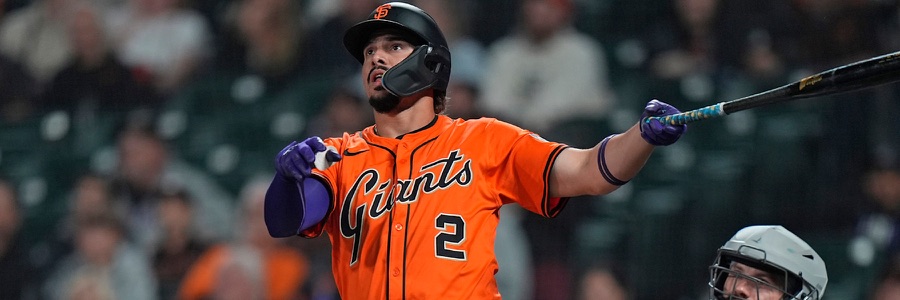
San Francisco lost 7-6 to San Diego on Saturday, September 12, and scored all six of its runs on four swings. Rafael Devers hit a two-run home run in the first, his thirty-seventh. Shay Whitcomb hit a solo home run in the second. Drew Cavanaugh hit a solo home run in the eighth and Drew Gilbert hit a two-run home run later in the same inning.
San Francisco left one man on base all night. San Diego left thirteen. And in nine innings of batting, the Giants did not come to the plate once with a runner in scoring position. Not once, in a game they scored six runs in.
A club that left one runner on base lost to a club that left thirteen. The vibes were not available for comment.
Where the home-run share actually sits#
San Francisco has scored 42.8 percent of its runs on home runs, 278 of 649, and that figure gets quoted as though it were extreme. Against the league it is ninth of thirty. The league itself scores 40.5 percent of its runs on home runs, on 8,323 of 20,526, and the median club is at 40.1. Cincinnati is at 49.8 and the Yankees at 47.9, which is what extreme looks like in a category whose top-to-bottom spread runs seventeen points.
Nor has the share been climbing. Month by month it went 23.1 percent in March, 29.7 in April, 41.4 in May, 52.3 in June, 48.3 in July, 42.5 in August and 42.7 so far in September. The peak was June. Cumulatively it reached its season high of 43.7 percent on August 26 and has fallen since.
What lifts the share is not the numerator. San Francisco has hit 175 home runs, fourteenth of thirty and within one of the league average of 175.2. The club hits an exactly ordinary number of home runs. The share is high because the rest of the offense is small.
What these numbers cannot settle#
Three limits, and the first is the one that would change the answer.
Walks are not entirely the hitter's to take. A club with a fearsome lineup gets pitched around and a club without one gets attacked, so some part of 429 is a verdict opposing pitchers have reached about this roster rather than a choice San Francisco's hitters are making. Nothing here separates those two, and the separation would need pitch-level work on zone rate and chase rate that is not in these numbers.
Second, this is a club that has used a very large number of players, and September at-bats belong disproportionately to men who were in the minor leagues in July. The full-season figures include both versions of the roster.
Third, runs on home runs counted from runs batted in is the right instrument for this question and it is not a measure of sequencing skill. A club can post a low figure by hitting well with nobody on base.
The call#
One goes on the ledger, and it resolves on the last day of the regular season.
San Francisco finishes 2026 with fewer walks than any other club in the major leagues. The Giants lead Toronto by three walks and Atlanta by eleven with nine games to play for each of them, and San Francisco's rate is the lowest of the three. Run forward on each club's own season rate, that is roughly a three-in-five call rather than a strong one, and the margin against Toronto is inside the noise of a single game in which somebody's starter cannot find the plate. Filed as a lean.
Revisit on September 28, the morning after the regular season ends.
Runs and home runs for all thirty clubs from the league's official team hitting record for the 2026 regular season, read Thursday, September 17. Runs scored on home runs counted two ways and reconciled: the runs batted in credited to every home run in the league's play-by-play for all 153 San Francisco finals, and an independent count of runners on base at the moment of every home run in the 2026 Baseball Savant event file. Both return 175 home runs and 278 runs for San Francisco, and Savant's home run count matches the league's for all thirty clubs with no exceptions. One trap worth naming: the schedule feed lists the June 16 game at Atlanta twice, once on the date it was suspended and once on the date it resumed, under a single game identifier. Counting both inflates the club by seven runs and three home runs, and the totals here are deduplicated and tie to the league's own season endpoint exactly. Split statistics with runners in scoring position are the league's own situational splits. Excluded: the postseason, spring training, and the two 2026 games that were postponed and never made up, which is why San Francisco's 153 games plus nine remaining come to 162. Known weakness: none of this is park adjusted, and Oracle Park suppresses home runs.