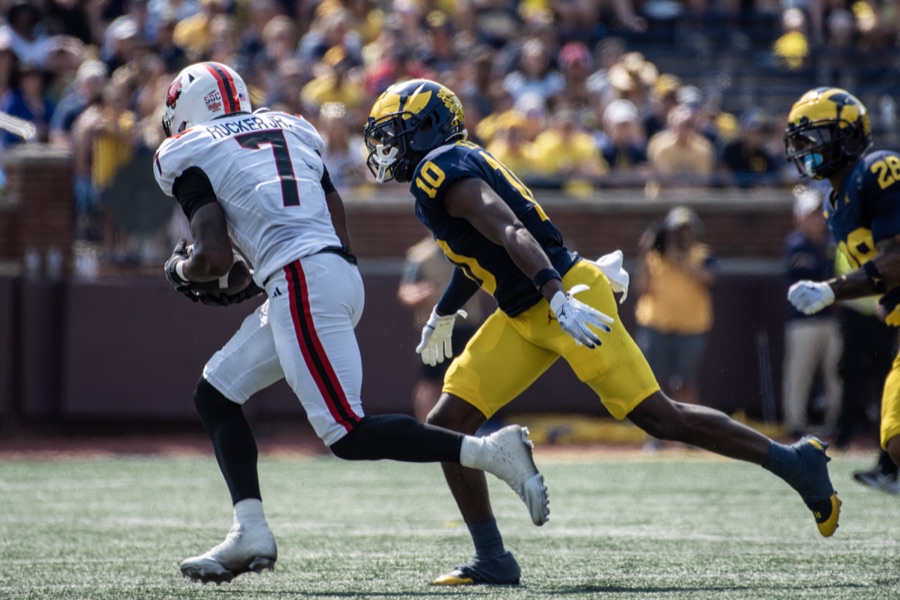
UTEP led Michigan by a touchdown, then gained 28 yards the rest of the way
Michigan did not lead until five seconds before halftime and won 52-17. The scoreboard is not the interesting part. UTEP stopped being able to move the ball, Michigan's quarterback ran the ball six times instead of 18, and the Wolverines punted once all afternoon.
Michigan 52, UTEP 17, at Michigan Stadium, in front of 110,668 people. Eight things from a game Michigan did not lead until five seconds before halftime.
1. UTEP did not stop scoring. It stopped gaining yards#
The mechanism is not the 52 points. Start at 5:58 of the second quarter, when UTEP went up 14-7 on an 18-yard touchdown throw. From that moment to the final whistle, Michigan outgained UTEP 308 yards to 28 and outscored it 45-3. Those are Michigan's own postgame figures, and the 28 is the number that decided the football game.
The third quarter is where it became a rout, and there is a reason that quarter stands out beyond the 28 points Michigan scored in it. Michigan had not scored a single point in the third quarter of either of its first two games. Zero against Western Michigan, zero against Oklahoma, 28 on Saturday.
UTEP had four possessions in that quarter. Three ended in punts and the fourth ended with Jonah Lea'ea intercepting E.J. Colston Jr. and returning it nine yards for a touchdown with two seconds left. Three of Michigan's four sacks came in that quarter.
The compounding effect shows up in where Michigan started. Its six first-half possessions began an average of 71 yards from the end zone. Its next four began an average of 53. Michigan did not suddenly find an extra gear so much as it kept getting the ball back near midfield from an offense that had quit producing first downs. UTEP finished with 150 total yards, nine first downs, 2 of 12 on third down and 1.8 yards on 32 carries.
2. Bryce Underwood ran the ball six times#
Against Oklahoma seven days earlier, Underwood carried 18 times, more than any Michigan running back. On Saturday he carried six times for 22 yards.
He also threw the ball better than he has all season: 19 of 25 for 223 yards and two touchdowns, 8.9 yards an attempt. His completion rate by game now reads 54.5% (12 of 22), 52.9% (9 of 17) and 76.0% (19 of 25).
Michigan ran the ball more effectively with its quarterback carrying it less. The team gained 185 yards on 42 attempts, 4.4 a carry, after 4.2 a carry on 25 attempts in the opener and 3.7 on 41 against Oklahoma. Whatever the 18 carries were last week, they were not the thing making the run game work.
3. Michigan punted once#
Cameron Brown punted six times against Western Michigan and seven times against Oklahoma. He punted once on Saturday, in the first quarter, and never again.
The rest of the drive chart says the same thing in different columns. Michigan made 27 first downs, which is more than the 26 it made in its first two games combined. It converted 9 of 13 third downs after going 7 of 23 across the first two games, and 2 of 2 on fourth down. Total offense went 276, 263, 431.
An offense that had produced 30 points in two games produced 45 in one. It did it at home against a Mountain West team that arrived 1-1 and left 1-2, which is the size of the sample and belongs beside the number.
4. It was the third different starting offensive line in three games#
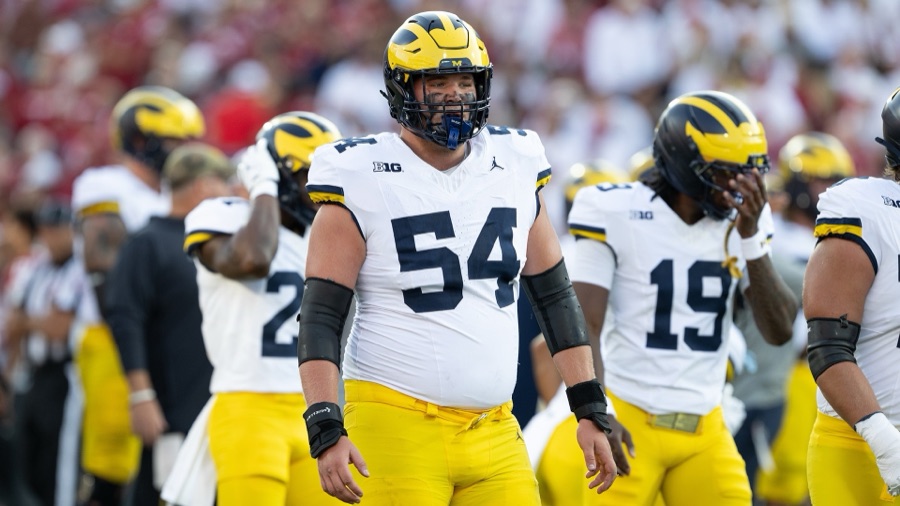
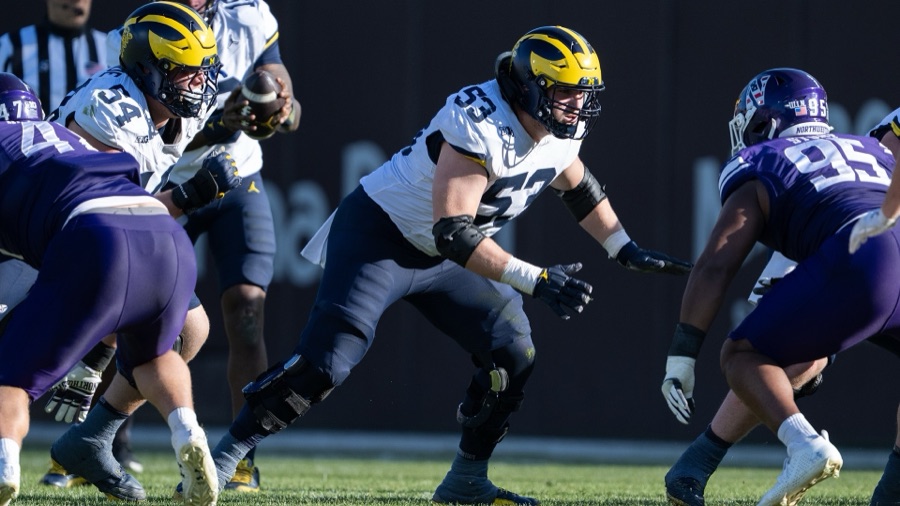
Michigan's own participation releases tell the story in three lines. Against Western Michigan: Blake Frazier at left tackle, Evan Link at left guard, Jake Guarnera at center, Brady Norton at right guard, Andrew Sprague at right tackle. Against Oklahoma, Link was not on the document at all and Nathan Efobi started at left guard. On Saturday, Sprague was the one missing, Link came back at left tackle rather than left guard, and Frazier moved across the formation to right tackle.
Three games, three different fives, and two of the five playing a position they had not started at this season. That line allowed one sack and blocked for 4.4 yards a carry, and it was the offense's best day of the year. The interior has been the constant: Guarnera and Norton have started all three at center and right guard.
5. Andrew Marsh had the afternoon the receiver room needed#
Marsh caught 10 passes for 105 yards and a 34-yard touchdown. In the first two games he caught five passes for 28 yards.
Eight of those 10 catches, and 68 of the 105 yards, came in the first half, when Michigan was either behind or level. He was not the beneficiary of garbage time against a team that had already stopped competing. His was the second 100-yard receiving game by a Wolverine this season, after JJ Buchanan's 126 in the opener.
6. The penalties stopped. The fumbles did not#
Michigan drew nine penalties for 80 yards in the opener and 11 for 90 against Oklahoma. On Saturday it drew four for 44. The one line on this team that had gotten worse through two weeks is the line that got better.
The giveaways went the other way, and they are the reason this was a game for a quarter and a half. Michigan has fumbled six times in three games and lost four of them. Underwood lost his second of the season and Savion Hiter lost one, and both UTEP touchdowns came directly off those two fumbles. The first set UTEP up for a 73-yard drive; the second handed it the ball at the Michigan 18, and UTEP scored on the next snap. That is 14 of UTEP's 17 points.
Kyle Whittingham was asked about it afterward and did not soften it. "Big concern," he said, adding that "six in three games is way too many."
7. Three players are hurt and nobody has said what is wrong with any of them#
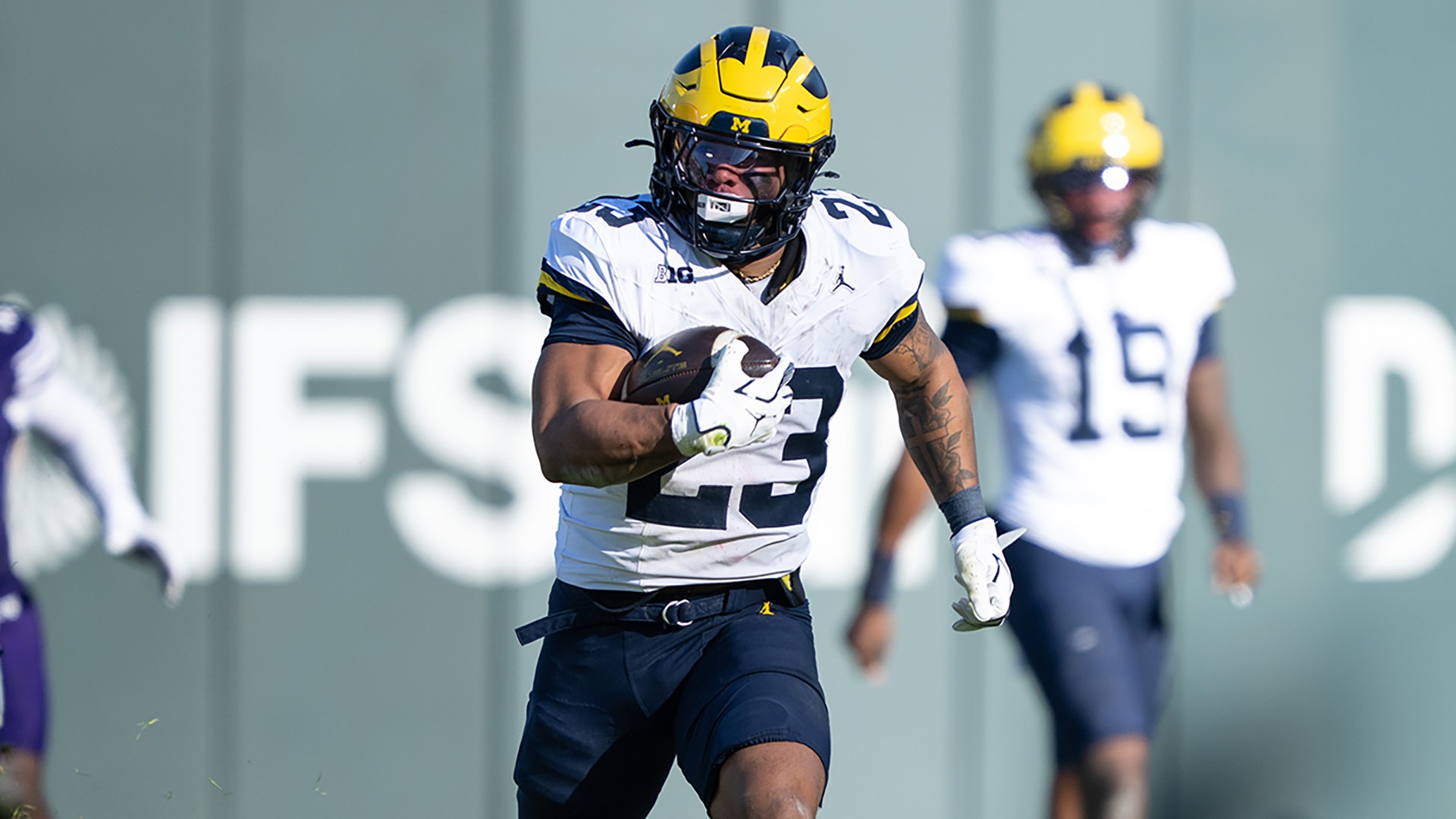
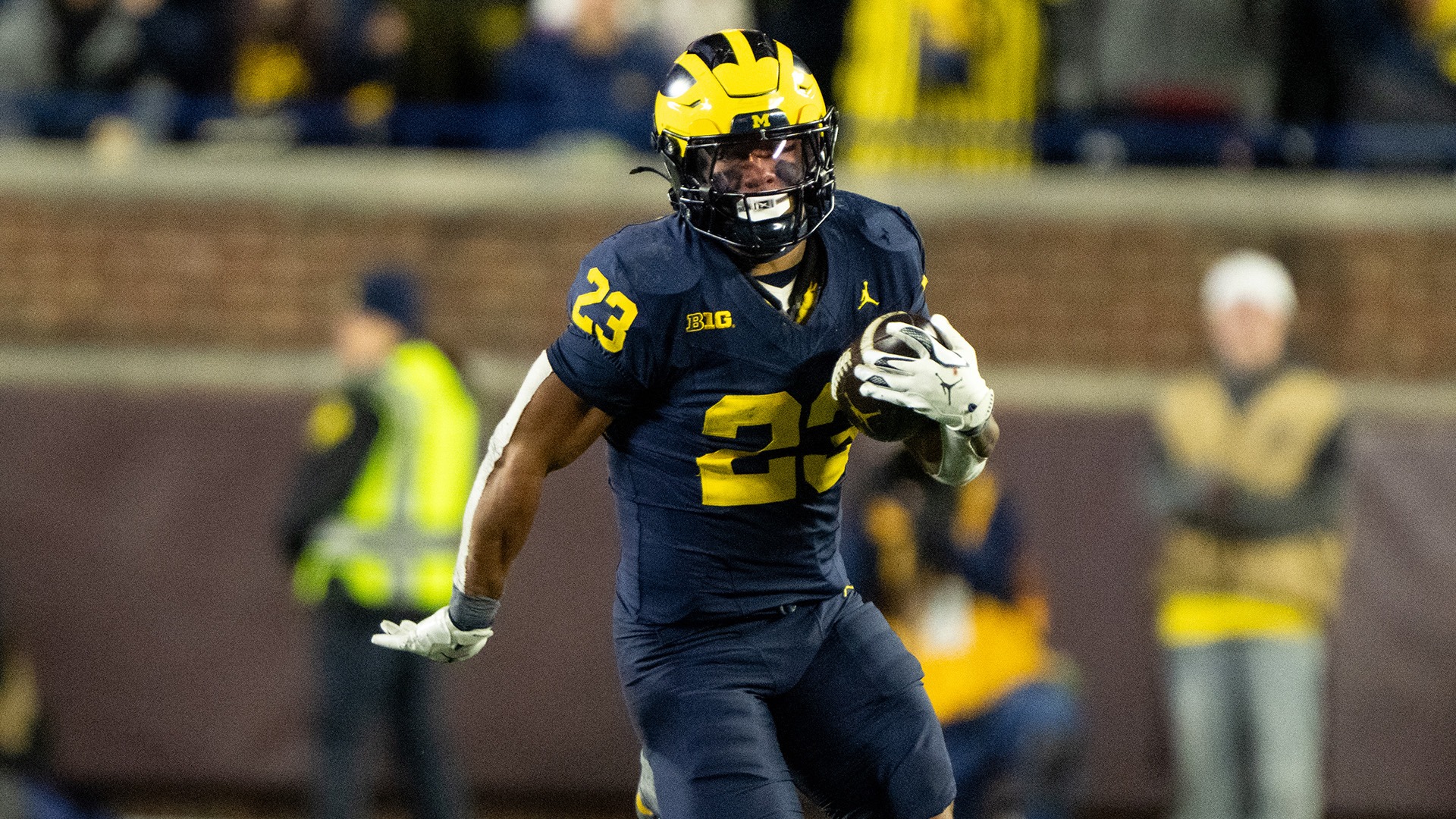
Jordan Marshall ran for 59 yards and a touchdown and then left in the third quarter after his right leg got tangled up on a tackle. Whittingham said Marshall aggravated a nagging injury, and that "We hope to have him ready to roll next week."
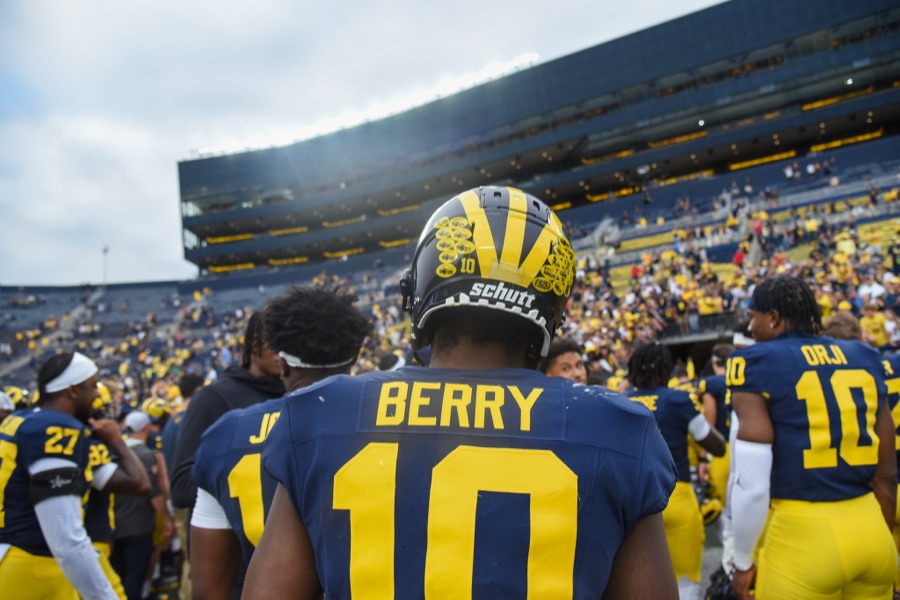
Sprague, the starting right tackle, and defensive back Zeke Berry were held out of the game entirely. Neither appears anywhere on Michigan's participation release, not as a starter, not as a backup, not among the special teams contributors. Whittingham said he is hopeful both play next week.
What nobody has said is what any of the three injuries actually is, and that is worth stating plainly rather than filling in. "A nagging injury" is a description of duration, not of a body part. Michigan has published no injury report this season and has been under no obligation to publish one. The Big Ten's availability reporting policy, expanded for 2026, says it "will apply to all competition against conference opponents only," and UTEP was Michigan's last nonconference game. Iowa is a conference opponent, so the first report is due by 8 p.m. Eastern on Wednesday and will be published on BigTen.org, with three more to follow before kickoff. It will be the first Big Ten availability report of Michigan's season, and the first document all year that is required to say who on this roster is hurt.
8. Michigan is still figuring out who plays, in week three#
Salesi Moa and Shamari Earls made the first starts of their careers on Saturday. They are the sixth and seventh Wolverines to make a first career start this season, after Jalen Hoffman, Troy Bowles, Chase Taylor and Dominic Nichols against Western Michigan and Eli Owens against Oklahoma. Five more players made their collegiate debuts: Tommy Carr, Markel Dabney, Carter Meadows, Ernest Nunley and Jimmy Pisani.
Hiter led the team in rushing for the first time in his career, with career highs of 11 carries and 62 yards, and the first two touchdowns of his career. Carr threw his first college touchdown pass, a 19-yard throw to Moa, who had never scored one either.
All of that is a reasonable thing to do against an opponent that is 4-63 all-time against AP Top 25 teams. It is a harder thing to do against a ranked Iowa team next Saturday, and the useful question about this Michigan team is not whether it can beat UTEP by 35. It is whether the version that appeared in the third quarter is the team, or whether the version that spent a quarter and a half trailing is.
Michigan has finished nonconference play. The nine games left on the schedule are all Big Ten games, and the first of them is against a ranked team at home in six days.
Sources: Michigan Athletics postgame notes and Player Participation release for Michigan vs. UTEP, both dated September 19, 2026; Michigan Athletics participation releases for Western Michigan (September 5) and Oklahoma (September 12); the CollegeFootballData game, team, player, drive and play feeds for the 2026 regular season; the Associated Press game story carried on ESPN's feed, September 19, 2026, for the Whittingham and postgame quotations and the injury reporting; and the Big Ten Conference's announcement of its 2026 football availability reporting policy, bigten.org.