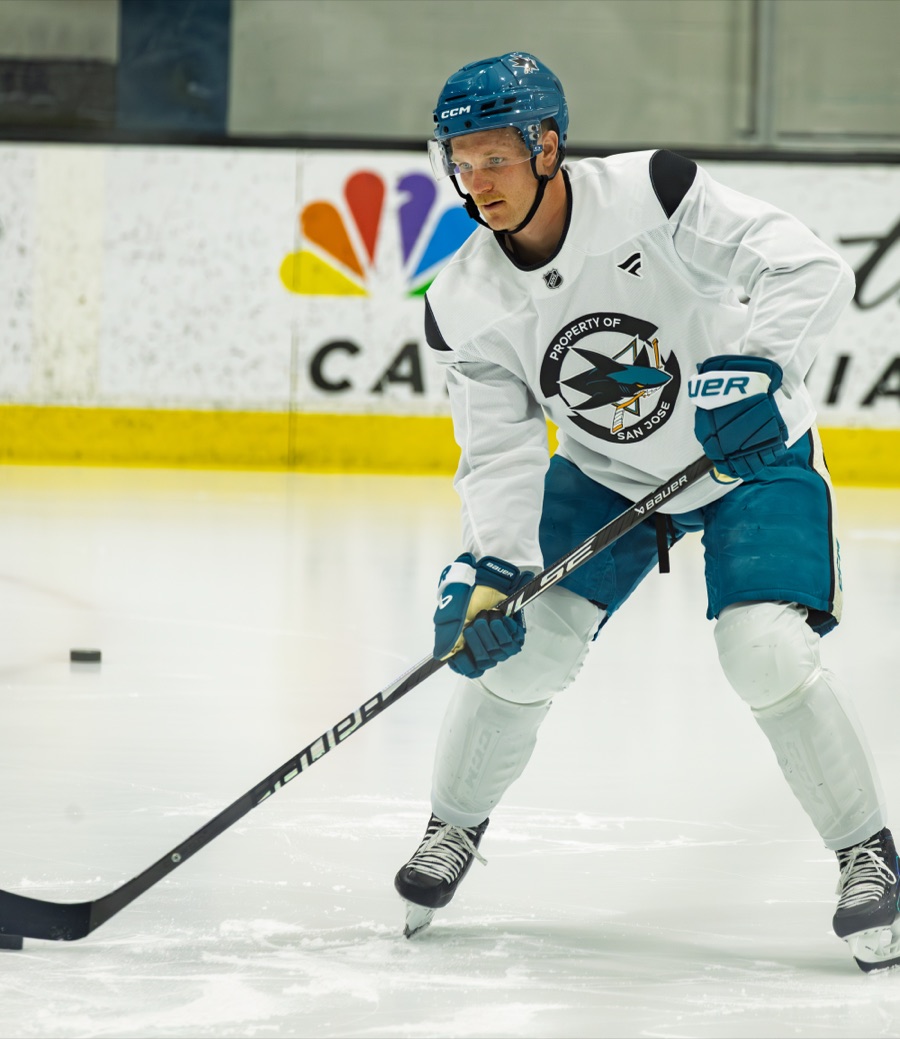
Jacob Trouba and the reputation premium
What $33 million actually bought, what it didn't, and whether he can still kill a penalty.
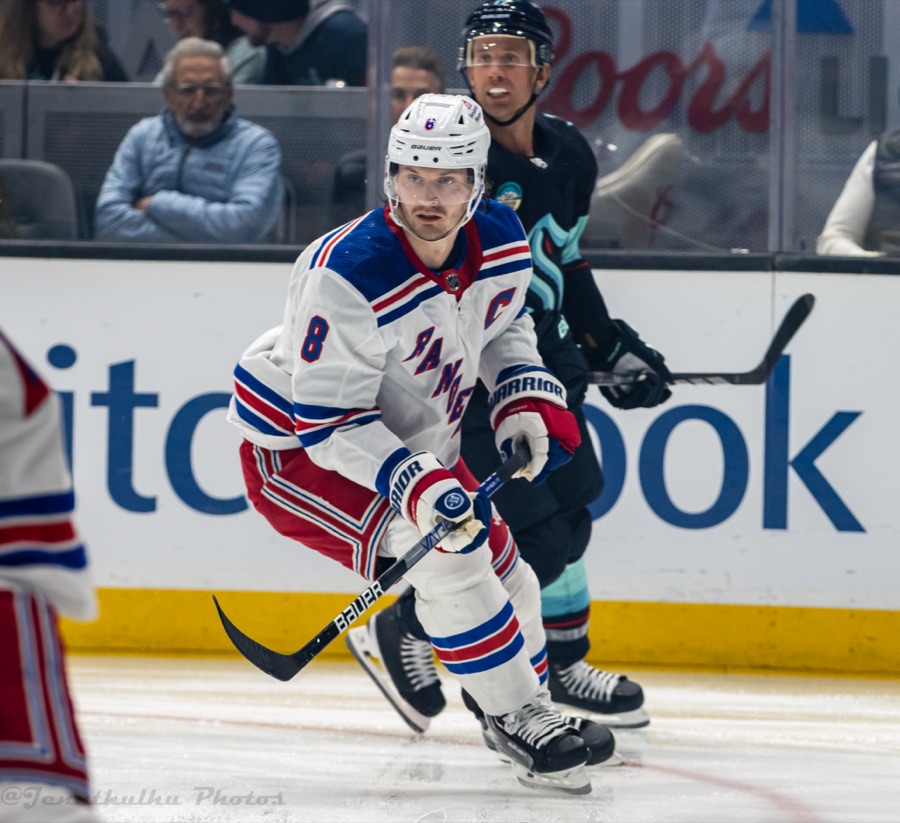
Here is the verdict before the receipts, because that is how we do this. The Sharks paid $8.25 million a year for four years to buy the Jacob Trouba you remember, and they are quietly betting that the Jacob Trouba the tracking data describes is the one that is lying. Sometimes that bet hits. But the tape has been telling a softer story for about four years running, and it is worth reading before camp so you know which Trouba to root for.
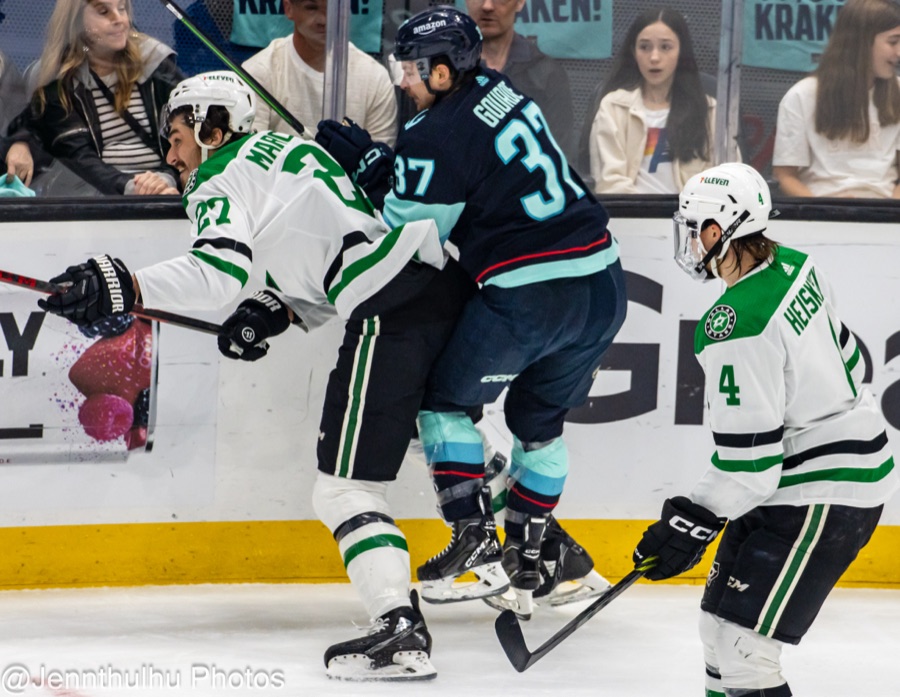
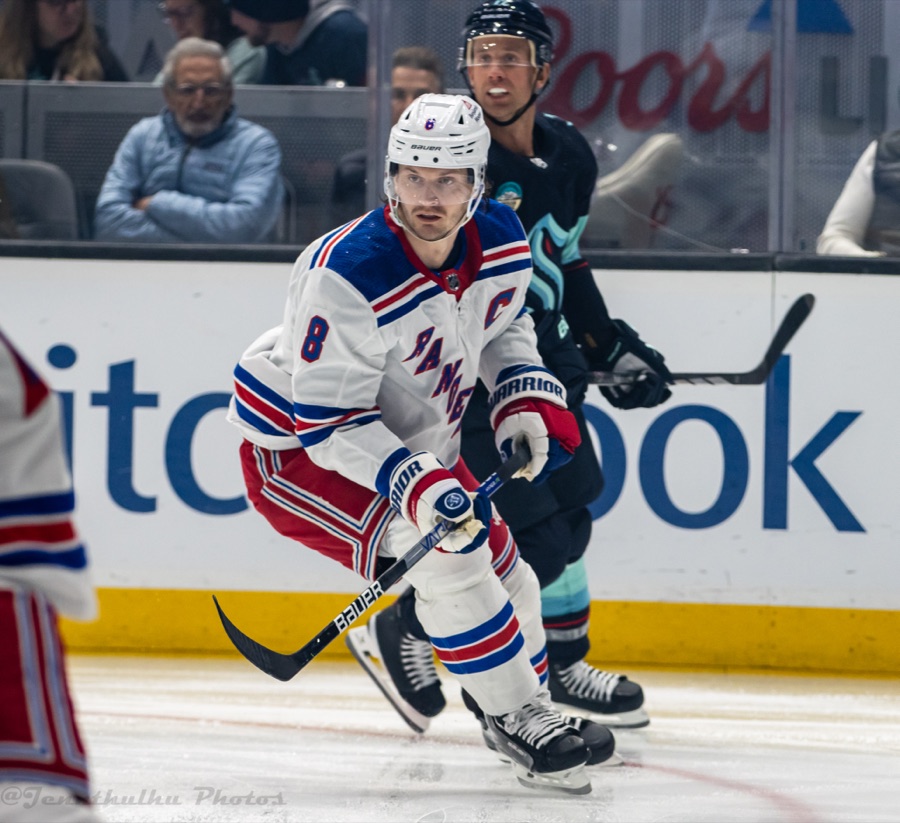
He is going to hit somebody very hard in October and the building is going to come apart at the seams.
Hold that image. We come back to whether it means anything.
A right-shot, physical, veteran defenseman who fills a genuine and obvious need, bought at a premium price and a scary term (through age 36) by a team that could afford both. His individual offense is real; his on-ice impact metrics have been mildly negative for four straight seasons; his ugly goal share is partly bad luck. He is a trusted penalty killer by deployment and a roughly average one by results. The whole thing hinges on a mobile partner (read: Sam Dickinson) and some puck luck turning. Defensible as a need-fill. Not a value win. Call it a C+.
What they actually bought#
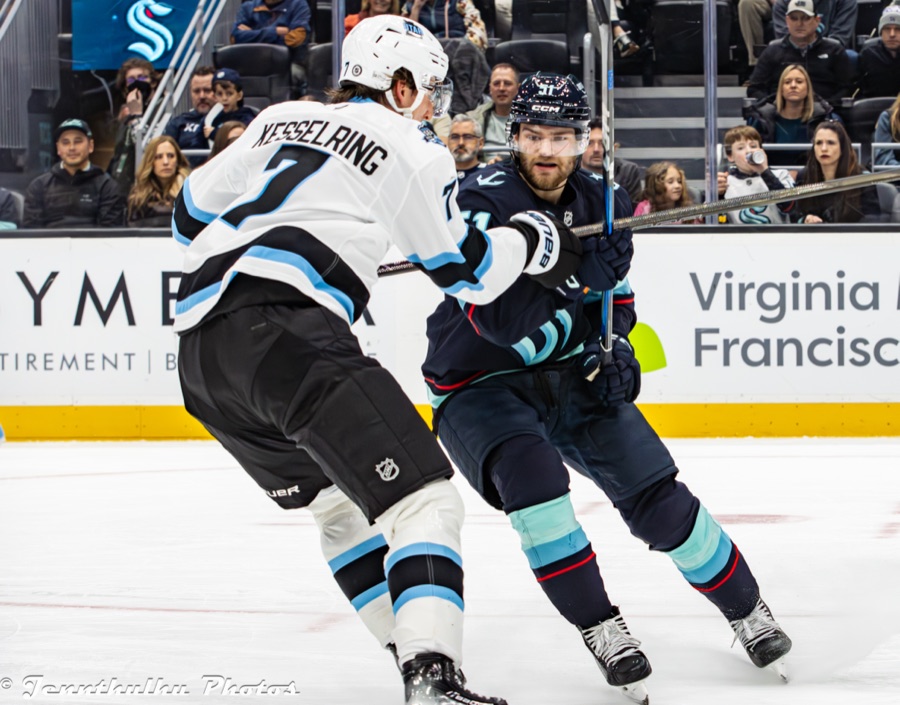
Four years, $33 million, an $8.25M cap hit that is 7.93% of this year's cap and shrinks toward nothing as the ceiling climbs. Signed by Mike Grier, negotiated by agent Kurt Overhardt, and here is the one genuinely shrewd wrinkle: no trade protection. None. Like the Kesselring deal, Grier paid up in dollars to keep the exits unlocked. If this goes sideways, Trouba is movable, and that matters more than it sounds.
He arrives off the back of the seven-year, $8 million Rangers albatross, which means the Sharks are paying him roughly his old number on a fresh term that Anaheim reportedly would not match. GM Pat Verbeek wanted him back. He wanted him back shorter. Grier's edge in this negotiation was the one thing a floor team always has lying around: term nobody else wanted to give. (The premium is the geography-and-length tax, not the market rate. Say it out loud so nobody pretends this was a bargain.)
The case for him (it is real, do not skip it)#
- A right shot on a blue line that had one. Before this, the only established signed righty was Kesselring, himself a bounce-back bet. You cannot grow a right-shot defenseman in a lab by September. Trouba is the veteran righty the roster was screaming for.
- Edge. 143 hits last season, 701 penalty minutes for a career, and the open-ice-hitter reputation that makes forwards keep their head up. San Jose's back end has been polite for years. He is not polite.
- A point shot. A real one, useful on a second power-play unit.
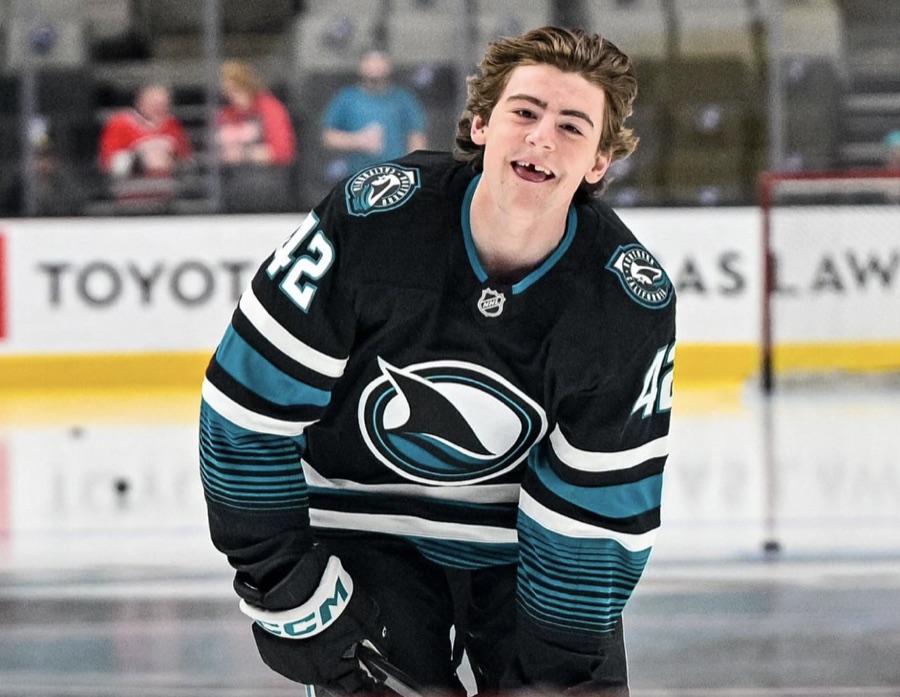
- The room. A former Rangers captain, 906 games, handed a locker next to Verhoeff, Lin, and Pohlkamp. There are worse people for three teenaged right-shot defensemen to watch prepare.
- He rebounded, and it was genuine. 35 points in Anaheim, his best since 2021-22, and by his own account "a lot to prove to myself." The comeback is not fiction. The question is how much of it travels.
The advanced-metrics reality#
Here is where the highlight reel and the spreadsheet stop making eye contact. His 2025-26 platform year, by the Luszczyszyn model (data via Natural Stat Trick):
| Metric | 2025-26 | Read |
|---|---|---|
| Game Score | 0.34 · 47th pct | Roughly average, overall |
| Offense rating | +1.4 · 75th | Good (the points are real) |
| Defense rating | -2.1 · 15th | Bottom of the league |
| 5v5 goals-for % | 46.2% | Ugly, but see below |
| 5v5 Corsi / high-danger % | 52.1% / 50.3% | Near even (the rescue) |
| Relative xGF% | -2.5 | Team better without him |
Two things are true at once, and you have to hold both. One: that 46% goal share looks like a fire, but the possession (52% Corsi) and high-danger chances (50%) underneath it were near even in Joel Quenneville's up-tempo system. Which means a chunk of the ugliness is finishing and goaltending luck, the kind that regresses back toward the middle. Good news, honestly.
Two, and this is the part that is not luck: his relative expected-goals share has been negative four seasons running (minus 1.1, minus 2.6, minus 2.8, minus 2.5). Four years of his teams being a little bit better with him on the bench. That is not a bounce of the puck. That is a trend. So the honest translation is not "disaster," and it is not "shutdown horse." It is: fine individual offense, below-average two-way impact, unlucky goal share. A middle-pairing defenseman being paid and deployed like a top-pairing one.
The penalty kill: trusted, not dominant#
The question is narrow, so here is the specific answer. Start with the fact that carries the most weight, because it is the one thing every coach he has ever had agrees on: Trouba has killed penalties, 2 to 3 minutes a night, for essentially his entire 13-year career. Winnipeg, the Rangers, Anaheim. Last season it was 2:56 a game, a genuine top-unit load. When a player draws that assignment for a decade-plus under a rotating cast of coaches, it tells you something real: the archetype is trusted. He is big, he is long, he blocks shots, he boxes bodies off the net front, and he will wear a puck to keep it out. Penalty-kill coaches love exactly that guy, and San Jose's kill needed exactly that guy, because it did not have enough willing, experienced righties to throw over the boards down a man.
The honest catch: deployment is trust, not proof. When you look at what the ice actually gave up, the results are ordinary. His overall defensive impact grades in the 15th percentile, and the shorthanded chances conceded with him out there land him around average, not elite. So the reputation ("physical shutdown penalty killer") outruns the measurement ("reliable body who blocks shots and clears the crease"). Both of those are the same sentence from ten feet apart; up close they are very different players.
So: is he good on the PK? He is a legitimate, experienced, willing top-unit penalty killer, and an upgrade in bodies for a unit that lacked them, who grades roughly average by impact. If someone sold you a special-teams weapon, gently recalibrate. If someone told you the kill just got a trustworthy 2-minute-a-night righty who will block a shot with his face in March, that is exactly right, and it is not nothing.
The asterisk that decides everything: the partner#
Here is the load-bearing caveat, and it is the one I would tack to the fridge. Trouba's rebound happened next to Jackson LaCombe, a mobile young left-hander who broke out into Anaheim's number-one defenseman that same year. Those two facts are holding hands. Trouba ate the heavy, physical, defensive-zone work so LaCombe could skate and create, and the pairing flattered both of them. Take LaCombe out of the picture and you are asking whether Trouba, at 32 and slowing, can carry a pair on his own.
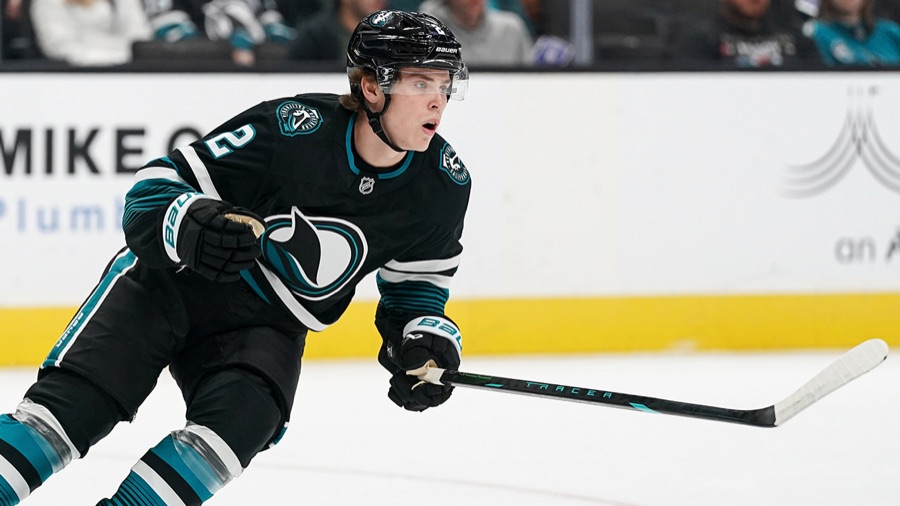
He cannot, and he is not being asked to. San Jose's answer has to be Sam Dickinson: young, mobile, a puck-mover who needs a veteran to handle the rough stuff next to him. If the Dickinson-Trouba pairing clicks, this whole signing looks like a smart, boring, need-filling veteran add and I will happily say so. If it does not, you have an $8.25 million physical defenseman whose partner cannot paper over the gaps, and you will be very glad about that missing no-trade clause. This is not a small swing factor. It is the factor.
The bet, stated plainly#
Strip the noise and the Sharks are wagering on three things breaking their way:
- The goal-share luck regresses up (likely, the possession says he was not that bad).
- Dickinson is the mobile partner who reconstitutes the Anaheim version (unknown, and the whole ballgame).
- The rising cap turns $8.25 million into a rounding error by year three (near-certain, at $104M and climbing to $150M-plus).
Hit two of three and this is a perfectly fine fourth defenseman on a team that needed one, at a price a floor team never feels. Hit one, and it is an expensive, declining, physical veteran you will spend two years trying to trade. The floor made the dollars painless and the missing trade protection made the exit clean, so the structure is smart even where the player is a coin flip. That is the Grier fingerprint: he protected himself even while overpaying. It is also, for what it is worth, the exact inverse of the Marchment signing the same afternoon, where the value was clean and the player was better than advertised. On July 1 the Sharks made one bet on a good player at a fair price and one bet on a reputation at a premium. This is the second one.
A real need filled by a real veteran at an unreal-for-the-player price, hedged by a floor that makes the money free and a contract that makes the exit easy. Middle-pairing impact, top-unit reputation, trusted-not-dominant on the kill, and entirely dependent on Dickinson looking comfortable beside him. Grade: C+, and it moves a half-letter in either direction the first time you see that pairing play a real game.
So, back to October. He is going to hit somebody very hard, and the building is going to lose its mind, and for four or five seconds you are going to feel like this was obviously, unarguably worth it.
Enjoy those seconds. Then go watch whether Dickinson looked comfortable on the other side of the pair, because that is the thing that actually decides this, and it will not trend on the jumbotron.
Sources: Hockey Stat Cards / Dom Luszczyszyn model, PuckPedia and CapWages contract and career data, MoneyPuck, and Eric Stephens (The Athletic) on the fit. All impact numbers are 2025-26 regular season unless noted. Full workup and both signings are logged in the repo.